
Measuring air quality
Get involved
Engagement
Raising Awareness
Alternatives
Scaling solutions to a global challenge
Our community lives with an invisible problem that potentially has wide-ranging impacts on both individuals and the economy as a whole: air pollution.
As citizens we have a legal right to clean air – but to be able to assert this right we must have access to information, as stipulated by the Aarhus Convention. Yet air quality was last measured in Sóller in 2007.
We believe that the right to access information about air quality is a precondition to the right to clean air: unless people know that there is an air quality problem, understand the risk it poses to their health and are informed about what measures are being taken to improve it, they are powerless to take action.
We can’t tackle what we can’t measure.
Because air pollution is hard to see, it’s often hard for us to pinpoint sources and trends to develop effective solutions. New sensor technology is changing that dynamic, allowing us to measure and map pollution concentrations street by street across the community and identify patterns and hotspots like never before.
Compared to conventional air pollution management, which commonly relies on a few sparsely located (and very expensive) monitors and modeling, hyperlocal monitoring allows for a more holistic picture of air quality at a high spatial resolution (with different concentrations every 100 meters, for example) and frequency (different concentrations every minute or few minutes, rather than on an hourly or daily basis).
Remember: different pollutants are present and travel in different ways, making a monitor in one spot often unable to detect a danger even 100 steps away. Research shows that air pollution is not evenly distributed and can in fact be up to eight times worse on one end of a street as another.
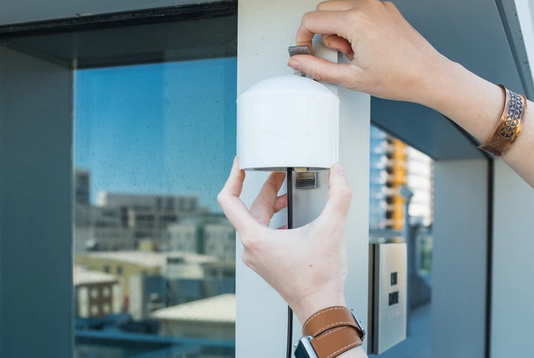
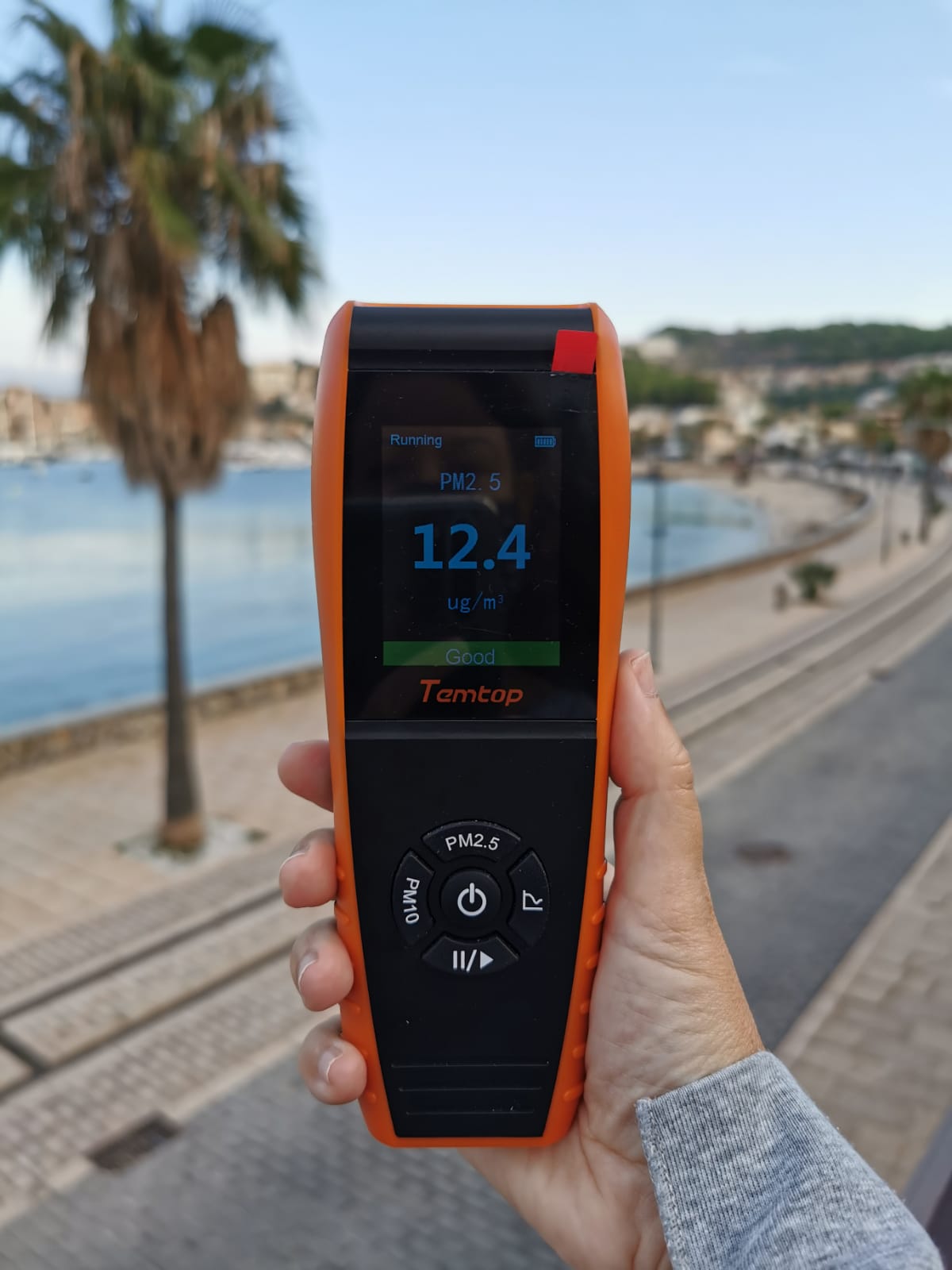
After an initial campaign deploying hand-held monitors, we are now committed to building a community air monitoring network. The goal of the community air monitoring network is to provide residents with accurate, real-time, local air quality data that may also be useful in scientific analysis. While these sensors are not approved by government regulatory agencies for use in regulatory actions, and their data cannot be used in legal cases, they can provide supplemental data that may be useful to communities, academic researchers, agencies, and others.
All information is available online, in real time, via our website map. In the future, we will also launch an app. Citizens will be able to sign up for alerts when levels of air pollution are high or when air quality is particularly low at a specific location, such as a school or sports stadium.
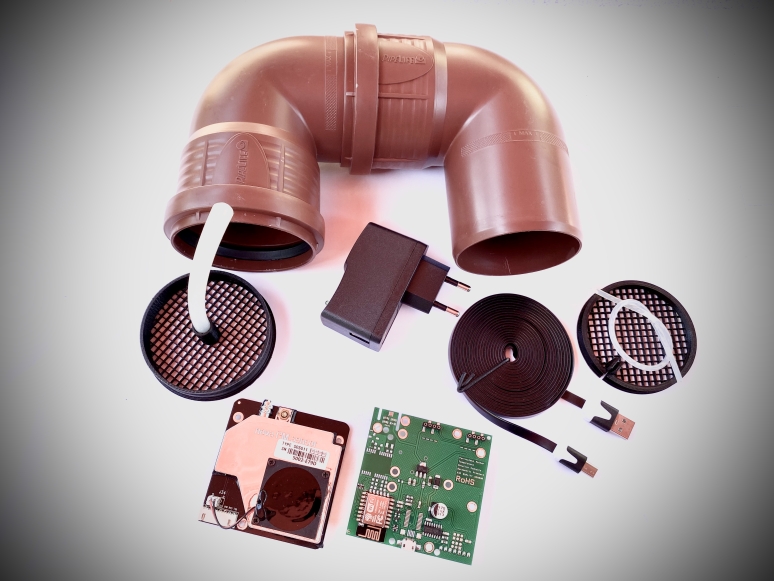
Using SDS011 particulate matter sensors, we form part of a wider network of 13,500 sensors worldwide in 73 countries. This is a successful citizen science initiative which was initially established by OK Lab Stuttgart, Germany. OK Lab Stuttgart is part of the Code for Germany program of the Open Knowledge Foundation Germany, an organisation that works to enable access to knowledge and encourage democratic participation by developing technologies and tools that strengthen civil society.
Monitoring Goals
Defining the pollutants of interest is a critical step in designing our network and choice of instruments. Air pollutants have different physical properties, as well as different health impacts, which have implications for how best to measure and map them. The pollutants we want to measure will be driven primarily by the emission sources of concern and the risk to human health.
In the case of the Sóller valley, we have chosen to measure particulate matter, PM 2.5 and PM 10.
Our immediate monitoring goals are:
- Identify air pollution problem and assess severity
- Create awareness
- Investigate source
Data Objectives
Our data objectives are focused on:
- Quantifying air pollution levels and characterizing pollution patterns across the valley
- Creating awareness
- Quantifying air pollution levels and characterizing pollution and associated health impact patterns across the valley
- Identifying the presence of pollutant(s) in excess of health benchmarks
- Identifying suspected emission sources (hotspots)
Problem displaying Facebook posts.